Find a WETT Inspection or Chimney Sweep in London, Ontario
Don’t guess, and don't overpay. Whether an insurer is asking for a report, you are buying a home, or you want to plan maintenance, organize the likely next step and confirm it with the report recipient and provider.
Plain-English recommendations for London & Area.
What brings you here today?
Select your situation below to see what the industry standards (and your insurance provider) actually require.
Free Safety Calculators
Use these quick homeowner tools to size your stove, check clearances, and confirm your firewood is safe to burn.
Wood Stove BTU Sizing Calculator
Find the right BTU range for your room before buying a wood stove.
Open BTU Calculator →Wood Stove Clearance Calculator
Estimate safe wall clearances using CSA B365 reduction rules.
Open Clearance Tool →Firewood Drying Time Estimator
Calculate when your split wood should reach the safe 20% moisture target.
Estimate Drying Time →More useful guides and local inspection pages:
Start with the Firewood Cord Volume Calculator, then browse local service pages for St. Thomas WETT Inspections, Strathroy, Dorchester, Arva, and Thorndale.
How to get the right pro for the job.
Take the Quiz
Answer 3 questions about your system and your goals.
Get Your Recommendation
Find out if you likely need a sweep, a Level 1 inspection, or both.
Request Quotes (Optional)
If you want, we can securely route your request to independent local providers. Always verify a provider's current credentials before hiring.
About London WETT Inspection
Navigating home insurance requirements and fire codes can be incredibly frustrating for homeowners. We built London WETT Inspection to cut through the confusion and act as a local WETT inspection and chimney-sweeping resource.
Our goal is simple: provide plain-English safety guides and help Southwestern Ontario homeowners request contact from independent local providers.
🔎 How matching works
London WETT Inspection is an independent referral resource, not an inspection company or certification body. We do not formally verify a provider's credentials, insurance, pricing, or work.
- ✓ Your triage result is shown before contact details are requested.
- ✓ Quote requests are optional and free to submit.
- ✓ Verify credentials in the official WETT directory before hiring.
The "WETT Certificate" Myth Explained
Watch this quick 50-second breakdown before you book any services. Learn what your insurance company actually needs.
Sweep vs. WETT Inspection: What’s the difference?
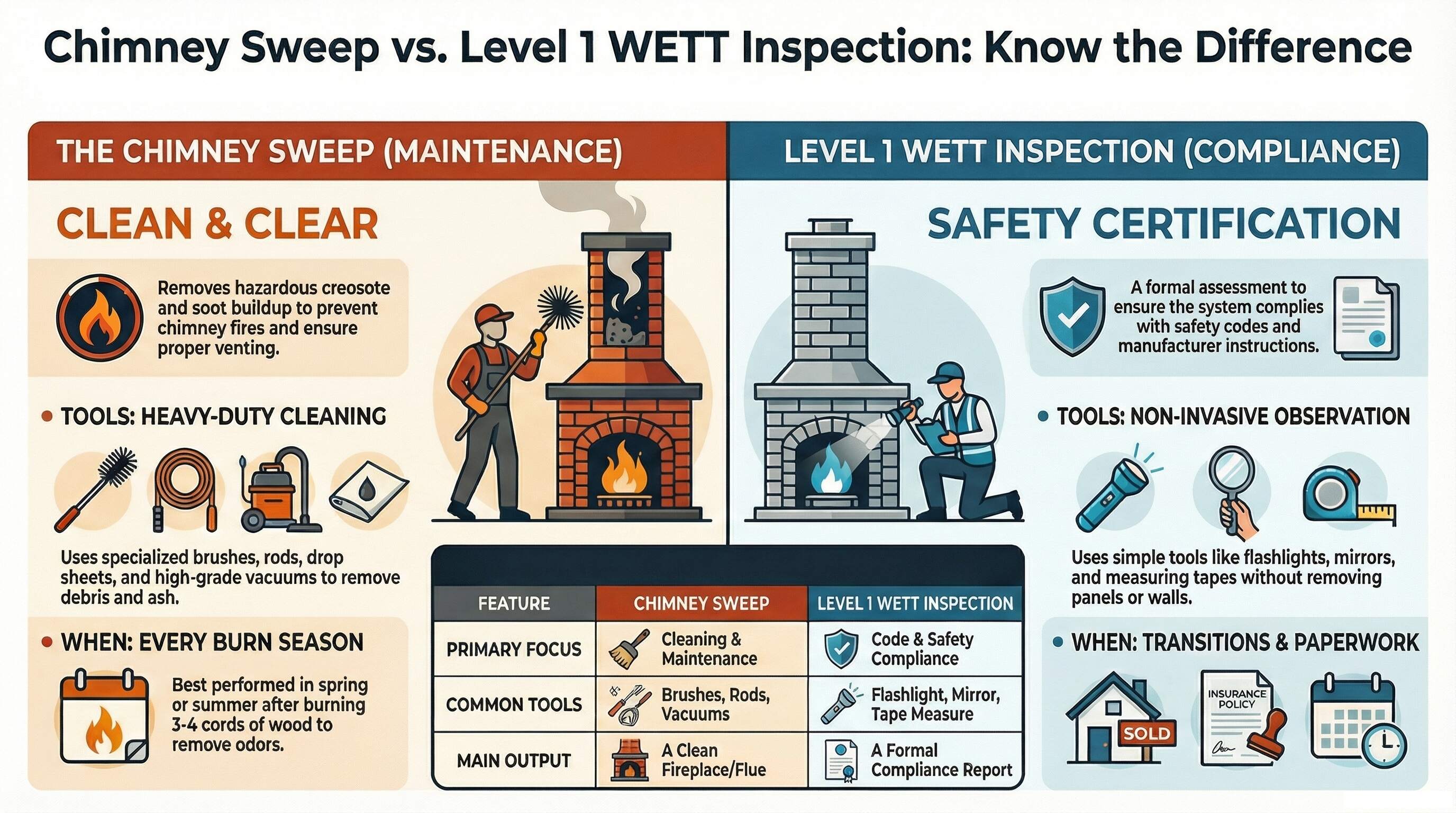
🧹 Chimney Sweeping
- ✅ What it is: A physical cleaning of your flue, smoke chamber, and firebox to remove dangerous creosote buildup.
- ✅ When you need it: Annually if used regularly, if you experience draft issues, or before an inspection if dirty.
- ✅ The goal: Prevent chimney fires and ensure proper venting.
📋 WETT Inspection
- ✅ What it is: A code-compliance visual check performed by a WETT-certified individual to ensure safe installation.
- ✅ When you need it: Requested by insurance companies, real estate agents, or when installing a new system.
- ✅ The goal: Verify safety and compliance through a detailed written report.
⚠️ THE "CERTIFICATE" MYTH
Insurance companies often ask for a "WETT Certificate." This does not exist. Companies cannot be WETT certified; only individuals hold the certification. Furthermore, a fireplace does not "pass" or "fail". Instead, an inspector issues an Inspection Report detailing whether the installation meets safety codes.
Wood Fireplaces & WETT
Not ready for quotes? Grab the free guide.
If you are just starting your research, download our plain-English guide. Learn what to prepare before an inspector arrives and the 5 questions you MUST ask before hiring a sweep.
Frequently Asked Questions
Why is my chimney still building up creosote even though I only burn dry, seasoned wood? ▼
What are the "red flag" signs that my chimney needs to be swept immediately? ▼
- Smoke Spillage: If smoke is drifting back into your room instead of venting upward, it often indicates a "draft issue" or a dangerous blockage.
- Strong Odors: Unpleasant, acrid creosote smells coming from the firebox are a sign of significant buildup.
- Visible Buildup: If you can see a layer of soot or tar thicker than 3 mm (1/8 of an inch) on the chimney walls, the National Fire Code considers it a potential fire hazard that requires cleaning.
- Physical Obstructions: Evidence of bird nests, animal activity, or falling debris inside the flue.